
 |
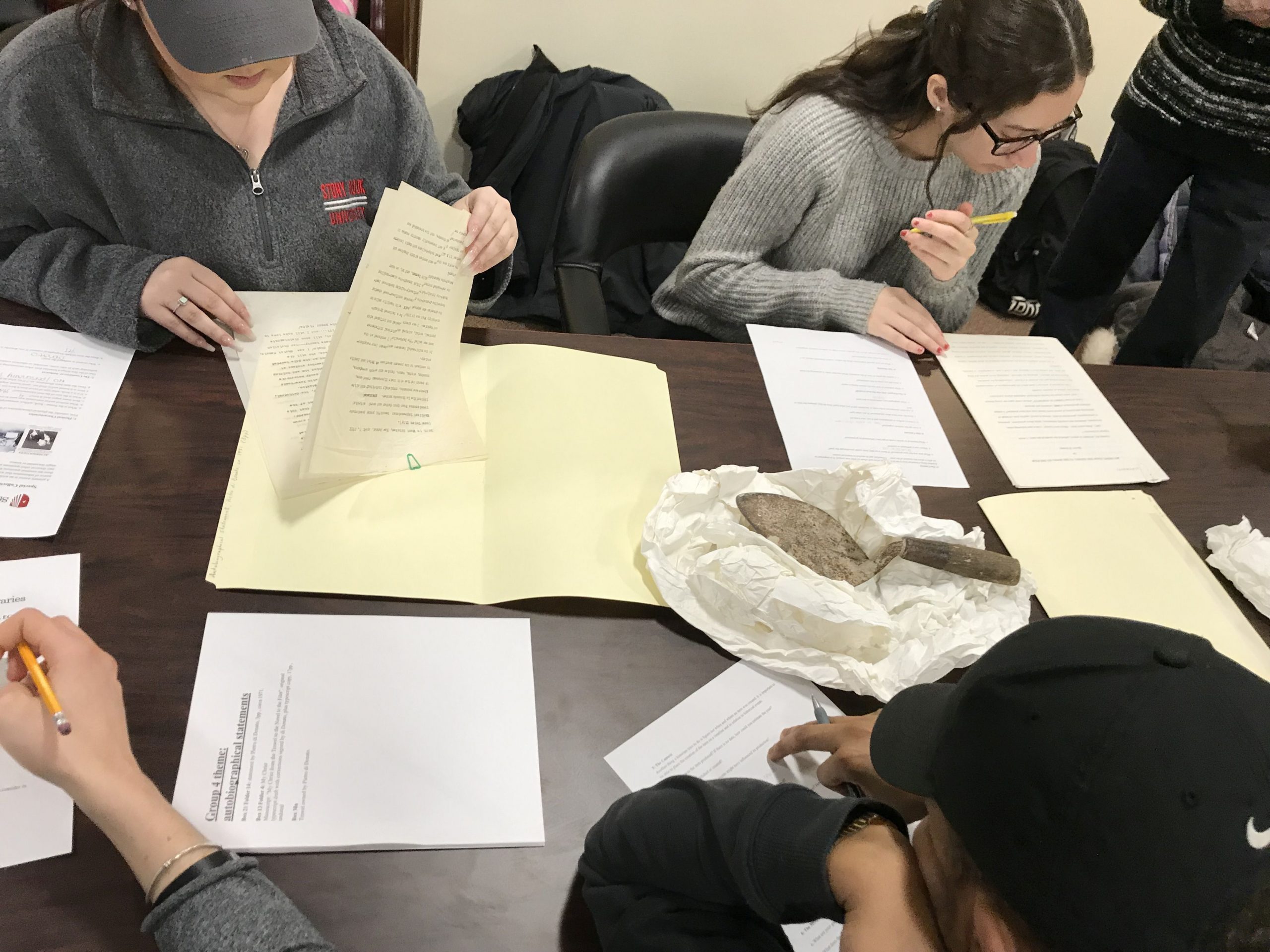
| Students in EGL/HUI 333 study papers and artifacts from the Pietro di Donato Collection. |
Primary sources bring history to life. The variety of primary source content and formats are diverse. When you text, tweet, send an e-mail, or take a selfie, you are creating a primary source. From diaries to photographs to real-time blog posts, these sources can be historically compelling, as they provide evidence of people, places, and events.
A primary source is an artifact, document, diary, manuscript, autobiography, recording, or any other source of information typically created at the time of an event or by someone directly involved. As you begin to examine primary sources, there are essential questions that you should consider. Not all questions work with all primary sources, and you may discover other questions as you go along. Keep in mind that no research project relies on just one single document or source.
Primary sources are firsthand accounts and evidence of people, places, and events. They exist in a variety of formats in all disciplines. Examples include written texts such letters and diaries, oral histories, art, music, textiles, songs, and social media (real-time Instagram posts and tweets!).
Secondary sources are interpretative works or analyses produced through researching, consulting, and studying primary sources. Examples include books and articles written from a historical perspective (later in time), reviews, textbooks, biographies, and indexes.
Tertiary sources are summaries of topics and subjects compiled from a variety primary and secondary sources. Examples include timelines, chronologies, bibliographies, directories, handbooks, and encyclopedia entries, such as Wikipedia.